Short answer: the fastest way to lower your car insurance premium is to raise your deductible, bundle policies, enroll in a telematics program, and re-shop your rate every year — combined, these can cut your bill by 25% to 50% or more without dropping coverage you actually need.
Bottom line up front for anyone skimming: you don’t need a broker or a long phone call to start seeing savings today. Several of the levers below take five minutes online or through your insurer’s app.
This guide walks through the specific, numbers-backed ways to lower your car insurance premium in 2026, roughly in order of how fast you can act on them and how much they typically save.
Shop Around Before Anything Else
The single biggest lever to lower your car insurance premium is also the simplest: get quotes from several insurers using identical coverage limits. The average gap between the cheapest and most expensive quote for the same driver runs about $642 a year.
Rates vary by insurer far more than most drivers expect, because each company weighs your age, location, vehicle, and driving history slightly differently. A company that’s competitive for a 25-year-old renter may be expensive for a 45-year-old homeowner, and vice versa.
Make this an annual habit rather than a one-time task. Insurers regularly reprice their books of business, so the cheapest option when you first bought your policy may not still be the cheapest option two or three years later.
Lower Your Car Insurance Premium by Raising Your Deductible
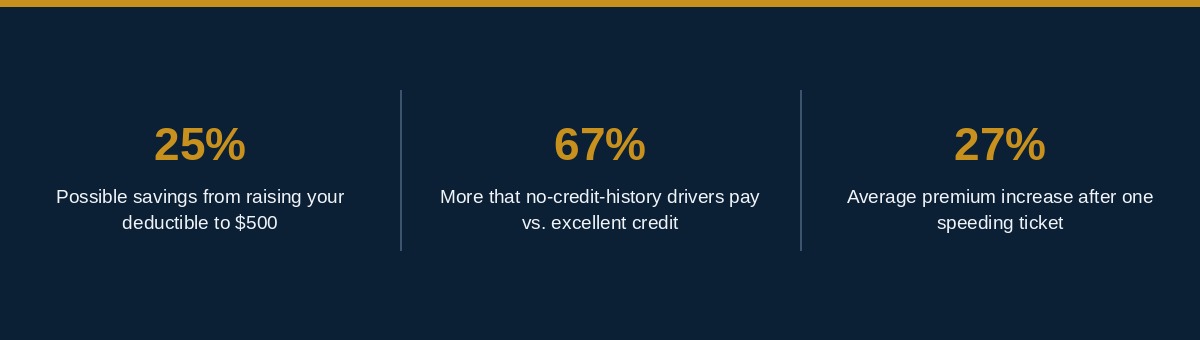
Raising your deductible is one of the fastest ways to lower your car insurance premium immediately. Moving your deductible from $250 to $500 can cut collision and comprehensive coverage costs by up to 25%.
Going further, from $500 to $1,000, can save an additional 28% on top of that. The tradeoff is straightforward: you’re agreeing to pay more out of pocket if you do file a claim, so only raise your deductible to an amount you could comfortably cover in an emergency.
A reasonable approach is setting aside the difference you save in premium into a small emergency fund earmarked specifically for your deductible, so the higher deductible never becomes a problem if you actually need to file a claim.
Reconsider Your Coverage Level
If your car is older or already paid off, switching from full coverage to a minimum or liability-focused policy can save about 68% on average, since you’re no longer paying to insure a vehicle’s replacement value against your own at-fault accidents.
This move only makes sense once your car’s market value has dropped enough that a total-loss payout wouldn’t be worth the ongoing premium difference. A common rule of thumb: if your annual full-coverage premium exceeds 10% of your car’s current value, it’s worth running the math on dropping collision and comprehensive.
Don’t drop liability coverage to save money, though — that portion protects you against injuries and damage you cause to others, and most states require a legal minimum you can’t skip regardless of your car’s age.
Enroll in a Usage-Based or Telematics Program
If you don’t drive many miles, or you drive carefully, usage-based insurance can meaningfully lower your car insurance premium. State Farm’s telematics participants who log relatively few miles have reported savings as much as 30%.
These programs use a phone app or a small plug-in device to track mileage, braking, and driving times, then adjust your premium based on actual behavior rather than broad demographic assumptions. Most insurers now offer some version of this.
If you work from home, have a short commute, or share a household with fewer drivers than vehicles, telematics is worth testing — there’s typically no penalty for enrolling and then opting out if your driving profile doesn’t earn a discount.
Stack the Discounts You’re Already Eligible For
Paperless billing, automatic payments, and paying your full premium upfront instead of monthly can combine for savings of up to 25% on their own, and most insurers apply these automatically once you opt in.
Beyond payment habits, ask specifically about safe-driver discounts, multi-vehicle discounts, multi-policy bundling discounts, anti-theft device discounts, good-student discounts, and affiliation discounts through employers, alumni groups, or professional organizations.
Bundling your auto policy with homeowners or renters insurance is one of the most reliable discounts available and often stacks with several of the others listed here, so it’s worth asking your current insurer for a bundled quote even if you’re happy with your separate policies.
Protect Your Credit Score and Driving Record
In most states, your credit-based insurance score affects your rate more than many drivers realize. Drivers with no credit history pay 67% more on average than drivers with excellent credit, all else being equal.
Your driving record matters just as directly — even a single speeding ticket increases premiums by an average of 27%, and the effect typically lingers on your record for three to five years depending on the state and the violation.
A defensive driving course can sometimes offset part of this, and many insurers offer a discount for completing one, though the exact amount varies by age, state, and insurer. It’s a low-cost way to lower your car insurance premium while also becoming a genuinely safer driver.
How to Lower Your Car Insurance Premium: Putting It All Together
None of these levers require switching insurers or giving up meaningful coverage. Combine comparison shopping with deductible choice, bundling, telematics enrollment, and an annual re-shop, and most drivers can meaningfully lower what they pay without reducing the coverage that actually protects them.
One last note: even among the cheapest car insurance companies, rates change with life events — moving, buying a new car, a change in credit, or a new driver on the policy — so re-shop annually rather than assuming your current rate stays competitive forever.
To sum up how to lower your car insurance premium: start with quotes from multiple insurers, raise your deductible if you can afford the risk, stack every discount you qualify for, and revisit the whole picture once a year rather than letting your policy auto-renew on autopilot.
Related Reading
Cheapest Car Insurance Companies: The 2026 State-by-State Guide
Renters Insurance 101: What It Covers and Why You Need It
National Association of Insurance Commissioners (NAIC)
This article is for general informational purposes only and is not insurance, financial, or legal advice. Discount availability and savings percentages vary by insurer and state — confirm current offers with your own insurance company before making changes to your policy.

About the Author: BizShieldGuide Team
The BizShieldGuide team researches and writes plain-language guides to business and personal insurance — general liability, professional liability, workers' compensation, business owners policies, cyber liability, and industry-specific coverage for small business owners, alongside straightforward explainers on auto, home, and renters insurance for everyday readers. Our articles are grounded in publicly available data from insurers and carriers (Insureon, The Hartford, Progressive, State Farm, and others), industry cost surveys, and standard policy language, and we link to primary sources wherever a number or coverage detail could change. We are not licensed insurance agents or brokers, and nothing here replaces a quote or advice from one for your specific situation.