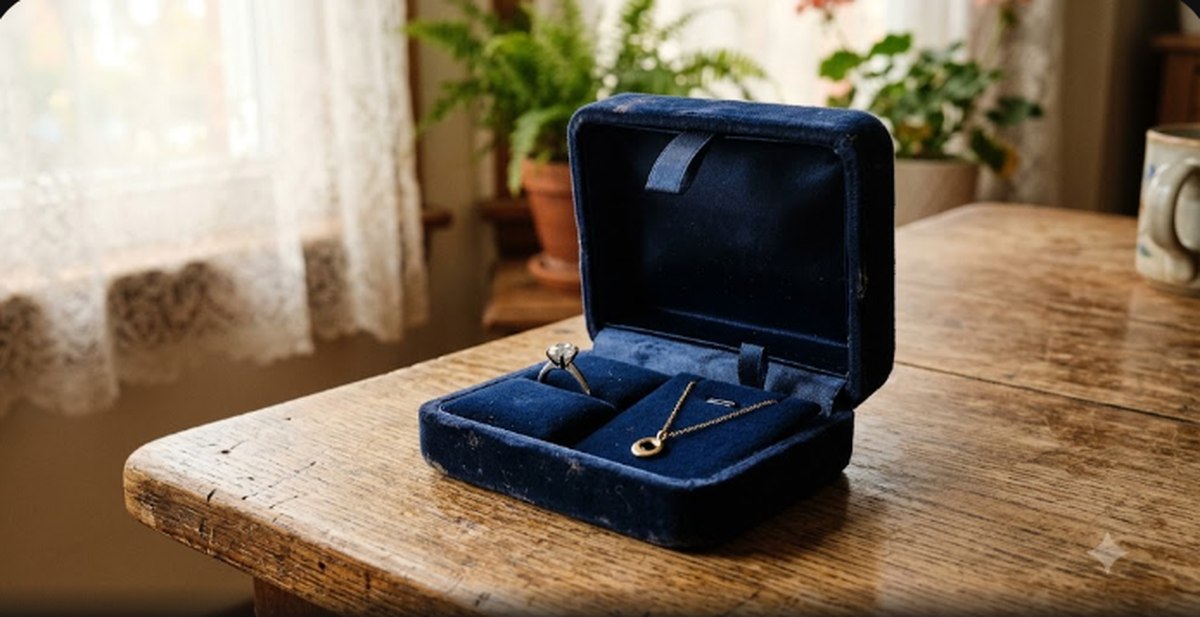
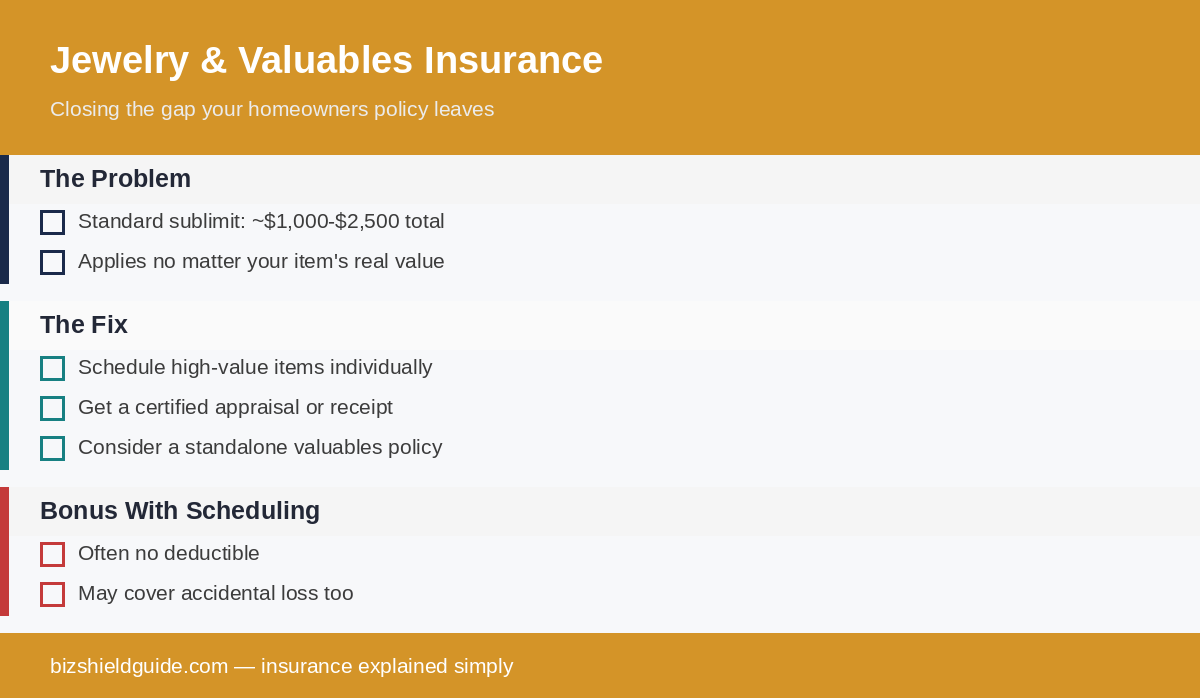
Jewelry insurance exists because most standard homeowners and renters policies cap coverage for jewelry, watches, and other valuables at a surprisingly low amount — often somewhere around $1,000 to $2,500 total for stolen jewelry, no matter how much your actual collection is worth. The short version: if your jewelry or valuables are worth more than that built-in sublimit, you generally need a separate scheduled personal property endorsement or a standalone valuable items policy to actually be covered for their full value. This is the core idea behind jewelry insurance: matching your coverage to what your collection is actually worth.
My aunt found this out the painful way after her home was broken into and her jewelry box was taken, including her mother’s wedding ring. She assumed her homeowners policy would cover the full appraised value, but the policy’s jewelry sublimit meant she only received a small fraction of what the ring alone was worth. She has since scheduled her remaining valuable pieces individually, which is the fix most agents recommend after a loss like that.
Why the Standard Sublimit Catches People Off Guard
Standard homeowners and renters policies are built to cover everyday belongings broadly, and jewelry sublimits exist specifically because jewelry is small, easy to steal, and historically a disproportionate source of claims relative to its insured value. The sublimit usually applies per category too — meaning all your jewelry combined might be capped at one number, regardless of how many individual pieces you own or what any single piece is actually worth.
Scheduled Personal Property: Insuring Specific Items by Value
A scheduled personal property endorsement lets you list specific high-value items individually on your policy, each insured for its own appraised or receipted value, which removes them from the standard sublimit entirely. This typically requires a recent appraisal or purchase receipt for each item, and premiums are calculated based on the item’s declared value, so a $15,000 ring costs more to schedule than a $2,000 pair of earrings.
What Scheduling Usually Adds That the Base Policy Doesn’t
Beyond raising your coverage limit to match the item’s real value, scheduled coverage often removes the deductible for that specific item and can extend protection to risks the base policy excludes, like accidental loss (simply losing a ring down a drain) rather than only theft. Exact terms vary by insurer, so it’s worth asking specifically whether accidental loss and mysterious disappearance are included when you request a quote.
Standalone Jewelry Insurance and Valuable Items Policies
For people with a larger jewelry or valuables collection, a standalone policy dedicated entirely to valuables can sometimes be simpler and more cost-effective than scheduling dozens of individual items on a homeowners policy. These policies are underwritten specifically around jewelry, art, watches, or collectibles and often include broader worldwide coverage, which matters if you travel with valuable pieces regularly.
Getting an Appraisal Without Overpaying for One
Most insurers require a written appraisal from a certified gemologist or licensed appraiser to schedule an item, and it’s worth asking your insurer for a list of appraisers they accept before paying for one independently, since some accept a recent purchase receipt in place of a full appraisal for newer items. Keep the appraisal, receipts, and photos of each piece stored somewhere outside your home — a cloud drive or a safe deposit box — so you have documentation ready if you ever need to file a claim.
Bottom Line
If your jewelry or valuables are worth more than a couple thousand dollars combined, it’s worth checking your policy’s built-in sublimit and comparing it against what you actually own. Scheduling higher-value pieces individually, or moving to a standalone valuables policy for a larger collection, is a relatively small added cost against the risk of recovering only a fraction of what a lost or stolen piece was really worth.
Jewelry insurance pricing and terms vary a fair amount between standalone insurers and scheduled endorsements, so it is worth comparing more than one option. The Insurance Information Institute has a helpful overview, see this guide to insuring jewelry and other valuables.
Related Reading
- What Does Homeowners Insurance Cover? The Complete 2026 Guide
- How Much Does Renters Insurance Cost in 2026? Avoid Overpaying

About the Author: BizShieldGuide Team
The BizShieldGuide team researches and writes plain-language guides to business and personal insurance — general liability, professional liability, workers' compensation, business owners policies, cyber liability, and industry-specific coverage for small business owners, alongside straightforward explainers on auto, home, and renters insurance for everyday readers. Our articles are grounded in publicly available data from insurers and carriers (Insureon, The Hartford, Progressive, State Farm, and others), industry cost surveys, and standard policy language, and we link to primary sources wherever a number or coverage detail could change. We are not licensed insurance agents or brokers, and nothing here replaces a quote or advice from one for your specific situation.