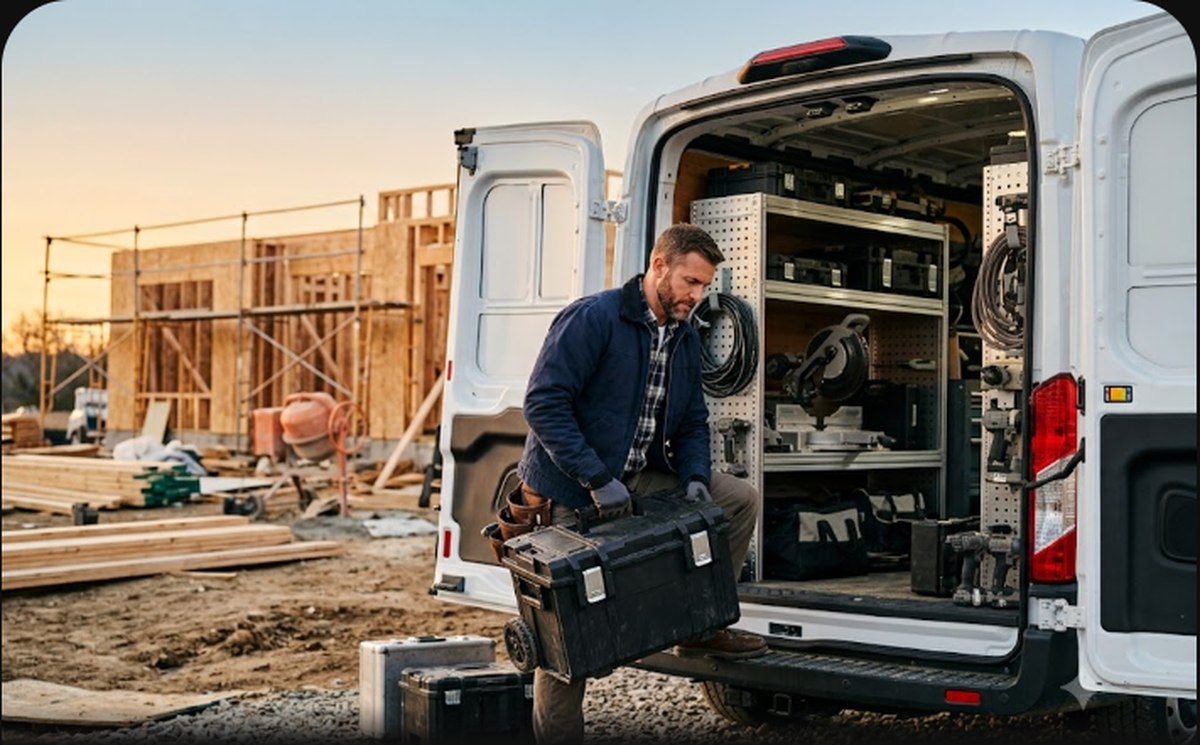
A standard business property policy only protects what’s inside your building at a fixed address — the moment your tools, equipment, or inventory leave that location, most of that coverage stops applying. Inland marine insurance is built to close that exact gap, covering business property while it’s in transit, stored off-site, or in a customer’s care. Here’s what it covers, who actually needs it, and how it’s different from what’s already in your BOP.
What Inland Marine Insurance Actually Covers
Despite the name, inland marine insurance has nothing to do with boats — the term dates back to when it covered goods traveling over land after shipping by sea. Today it covers business property that moves: tools and equipment at jobsites, laptops and cameras carried between client locations, inventory in transit, and even property temporarily in your care, like a customer’s item left at a repair shop.
It also covers specialized or high-value items that a standard commercial property form often excludes or caps too low, including fine art, specialty electronics, and custom-built equipment.
How It’s Different From Your BOP
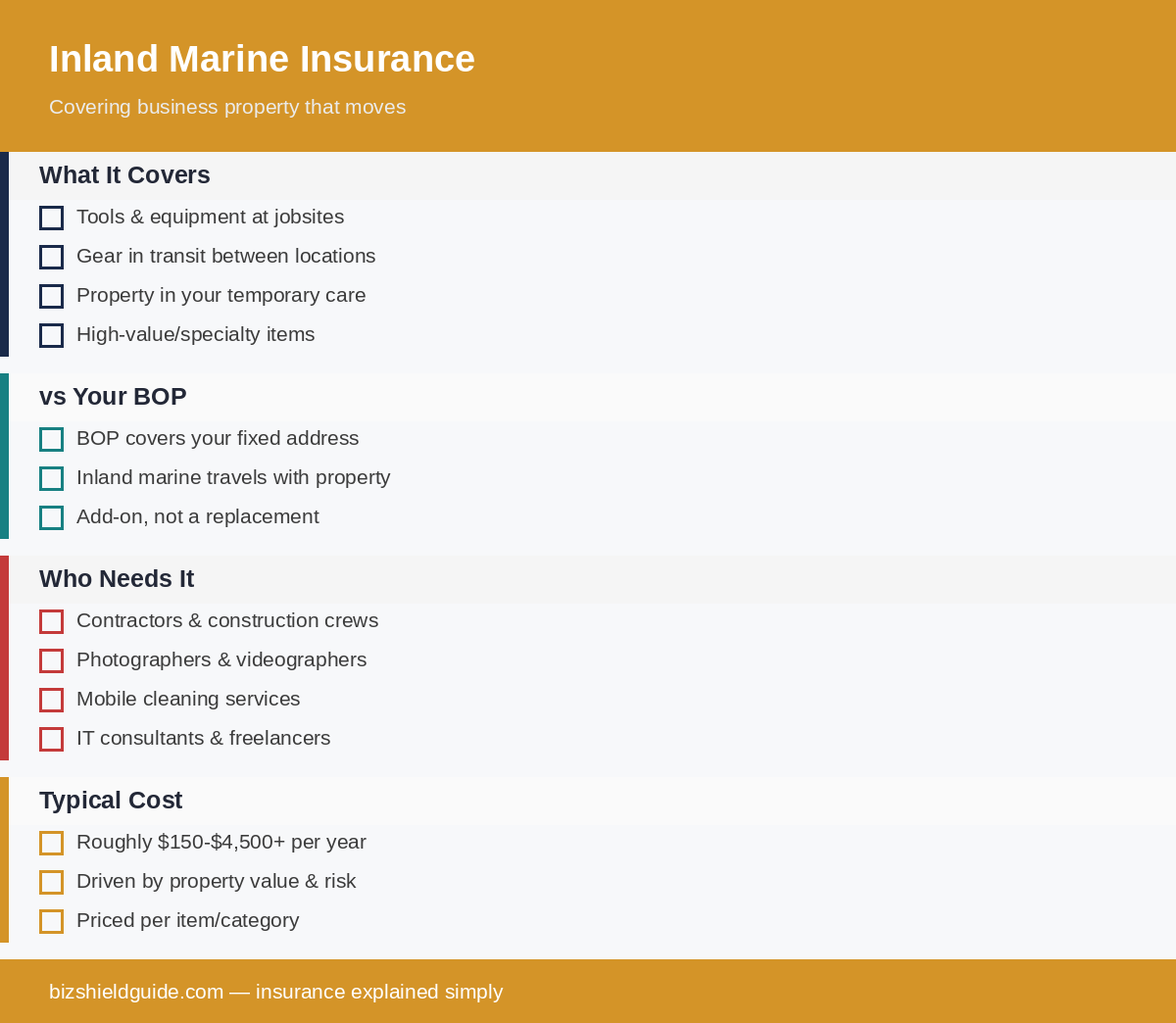
A Business Owner’s Policy bundles general liability with commercial property coverage, but that property coverage is written around your fixed business address. Inland marine works as a “floater” that travels with the covered property wherever it goes, which is exactly why contractors, photographers, and mobile service businesses tend to need it even though they already carry a BOP.
Think of it less as a replacement for your BOP and more as an add-on for anything valuable that regularly leaves your building.
Who Actually Needs It
Inland marine coverage matters most for businesses whose valuable property is routinely on the move rather than sitting in one location:
- Contractors and construction crews: Tools and equipment moving between jobsites.
- Photographers and videographers: Cameras and gear traveling to shoots and events.
- Cleaning and mobile service businesses: Equipment and sometimes customer property in their care.
- IT consultants and freelancers: Laptops and hardware used at client sites.
What It Typically Costs
Pricing depends heavily on the value of the property covered, the type of coverage, and your industry’s risk profile, but many small businesses pay somewhere in the range of $150 to a few thousand dollars a year. A contractor insuring a truck full of power tools will land in a very different price range than a photographer insuring a couple of camera bodies and lenses.
Filing an Inland Marine Claim
Keep an itemized list of covered equipment with serial numbers and purchase receipts, since insurers settling an inland marine insurance claim will ask for proof of ownership and value for anything reported stolen or damaged off-site.
Report theft to local police right away and get a case number before calling your insurer, since most inland marine policies require a police report to process a stolen-property claim.
Working Inland Marine Coverage Into Your Renewal
Review your covered items list at least once a year, since new tools and equipment you’ve bought since your last renewal aren’t automatically covered unless you’ve added them to the policy.
It’s also worth asking your broker whether your policy uses scheduled coverage for specific high-value items or blanket coverage for a whole category of equipment, since the right structure depends on how often your inventory of tools actually changes.
Bottom Line
If your business regularly moves tools, equipment, or inventory away from your main location, a standard BOP alone is probably leaving a real gap in your coverage. Inland marine insurance is usually inexpensive relative to the value it protects, and it’s worth asking your broker to itemize exactly what property would and wouldn’t be covered without it. For more on how this fits alongside your core business property coverage, see our guide comparing a BOP against buying coverage separately.
For the Insurance Information Institute’s own explainer on this coverage, see their guide to understanding inland marine insurance.
Related Reading
Business Owner’s Policy (BOP) vs. Buying Coverage Separately: Which Saves You Money?
Contractor and Construction Business Insurance: What Coverage You Actually Need

About the Author: BizShieldGuide Team
The BizShieldGuide team researches and writes plain-language guides to business and personal insurance — general liability, professional liability, workers' compensation, business owners policies, cyber liability, and industry-specific coverage for small business owners, alongside straightforward explainers on auto, home, and renters insurance for everyday readers. Our articles are grounded in publicly available data from insurers and carriers (Insureon, The Hartford, Progressive, State Farm, and others), industry cost surveys, and standard policy language, and we link to primary sources wherever a number or coverage detail could change. We are not licensed insurance agents or brokers, and nothing here replaces a quote or advice from one for your specific situation.