
Identity theft insurance sounds like it would replace money a thief steals from your accounts, but that is exactly what it usually does not do. The short version: identity theft insurance mainly reimburses the cost of cleaning up after identity theft — lost wages, legal fees, notary costs, credit monitoring — not the stolen funds themselves.
It is often cheap enough as a homeowners or renters policy add-on that the real question is whether you need identity theft insurance at all, or whether protections you already have make it redundant.
What Identity Theft Insurance Actually Covers
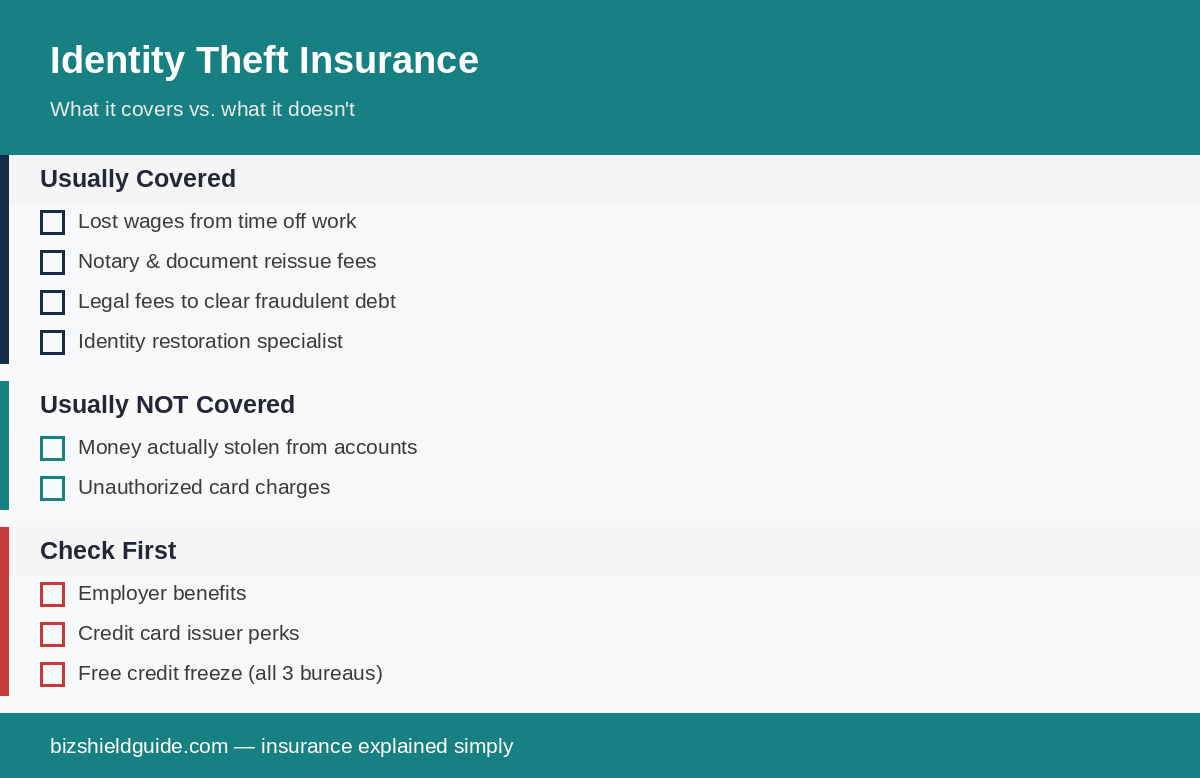
Identity theft insurance reimburses the expenses of restoring your identity after fraud happens, rather than the fraud itself. That typically includes lost wages from time taken off work to deal with the fallout, fees for notarizing and mailing affidavits and legal documents, costs to reissue documents, and legal fees if you need an attorney to clear fraudulent debt.
Many identity theft insurance policies also include access to an identity restoration specialist who handles the paperwork and phone calls on your behalf, and some more comprehensive plans bundle in credit monitoring or personal cyber coverage.
What It Doesn’t Cover (This Is the Part People Miss)
Identity theft insurance generally does not pay you back for money a thief actually stole from your bank account or ran up on a credit card. Recovering those funds is usually handled separately through your bank’s fraud protections, your credit card issuer’s zero-liability policy, or the merchant, not through this coverage. A few more comprehensive policies do include reimbursement for fraudulent account withdrawals, so it is worth reading the fine print of any policy you are considering rather than assuming coverage extends to stolen money.
How Much Identity Theft Insurance Costs to Add
As an add-on to an existing homeowners or renters policy, identity theft insurance typically runs about $20 to $60 a year, which is inexpensive compared to standalone identity protection services that bundle in monitoring and can run considerably more per year. Coverage limits on the add-on version are usually modest, often in the low thousands of dollars, which is generally enough to cover restoration expenses but not a major financial loss.
Check What You Might Already Have Before You Buy
Before adding a policy, check what protection you already have. Some employers include identity theft coverage as a benefit, several credit card issuers offer basic monitoring or resolution services for free, and companies that have had a data breach sometimes provide free credit monitoring to affected customers for a period afterward.
A credit freeze, which is free and can be set up directly with each credit bureau, is one of the strongest protections against new-account fraud and does not require paying for identity theft insurance at all.
When Identity Theft Insurance Is Worth Adding
Identity theft insurance makes the most sense for people who want professional help navigating the restoration process rather than doing it themselves, and who don’t already have overlapping coverage through work or a credit card. Most identity theft cases are resolved within about a week, but roughly one in ten victims deals with the fallout for a month or longer, and that is the scenario the coverage is really built for: not the theft itself, but the time and money it costs to put things back together.
Bottom Line
Identity theft insurance is not a replacement for stolen money, it is reimbursement for the time and cost of cleanup. At $20 to $60 a year as a policy add-on, it is a low-cost option if you want professional restoration help and don’t already have similar coverage elsewhere.
A free credit freeze and knowing your bank’s and credit card’s fraud policies will do more to actually prevent a loss in the first place.
Related Reading
- What Does Homeowners Insurance Cover? The Complete 2026 Guide
- Renters Insurance 101: What It Covers and Why You Need It
- Cyber Liability Insurance 101: What It Covers and Why Small Businesses Can’t Ignore It Anymore

About the Author: BizShieldGuide Team
The BizShieldGuide team researches and writes plain-language guides to business and personal insurance — general liability, professional liability, workers' compensation, business owners policies, cyber liability, and industry-specific coverage for small business owners, alongside straightforward explainers on auto, home, and renters insurance for everyday readers. Our articles are grounded in publicly available data from insurers and carriers (Insureon, The Hartford, Progressive, State Farm, and others), industry cost surveys, and standard policy language, and we link to primary sources wherever a number or coverage detail could change. We are not licensed insurance agents or brokers, and nothing here replaces a quote or advice from one for your specific situation.